

Waste bags look like a trivial purchase until the wrong size means shredded paper spilling down the inside of the cabinet every time someone lifts the bin out. Sizing is most of the job, and there are a few things worth knowing beyond that.
Match gallons to the bin, not the machine
Bags are sold by gallon capacity, and that figure needs to match your shredder's bin volume — listed in the specification table on every shredder product page here.
Get it wrong in either direction and you create a problem:
- Too large and the bag bunches and folds inside the bin, reducing usable space and catching in the pull-out mechanism. People then force the drawer, which is how runners break.
- Too small and the bag will not reach the rim. Shredded paper goes around the bag rather than into it, which defeats the point entirely.
Common sizes run from around 7 gallons for deskside machines through 20 to 32 gallons for shared and departmental units, up to 50 gallons for large commercial machines.
Why finer cuts need bags most
Strip-cut shreds are long and flat. They settle into layers, pour out reasonably cleanly, and a bin without a bag is merely annoying rather than a genuine mess.
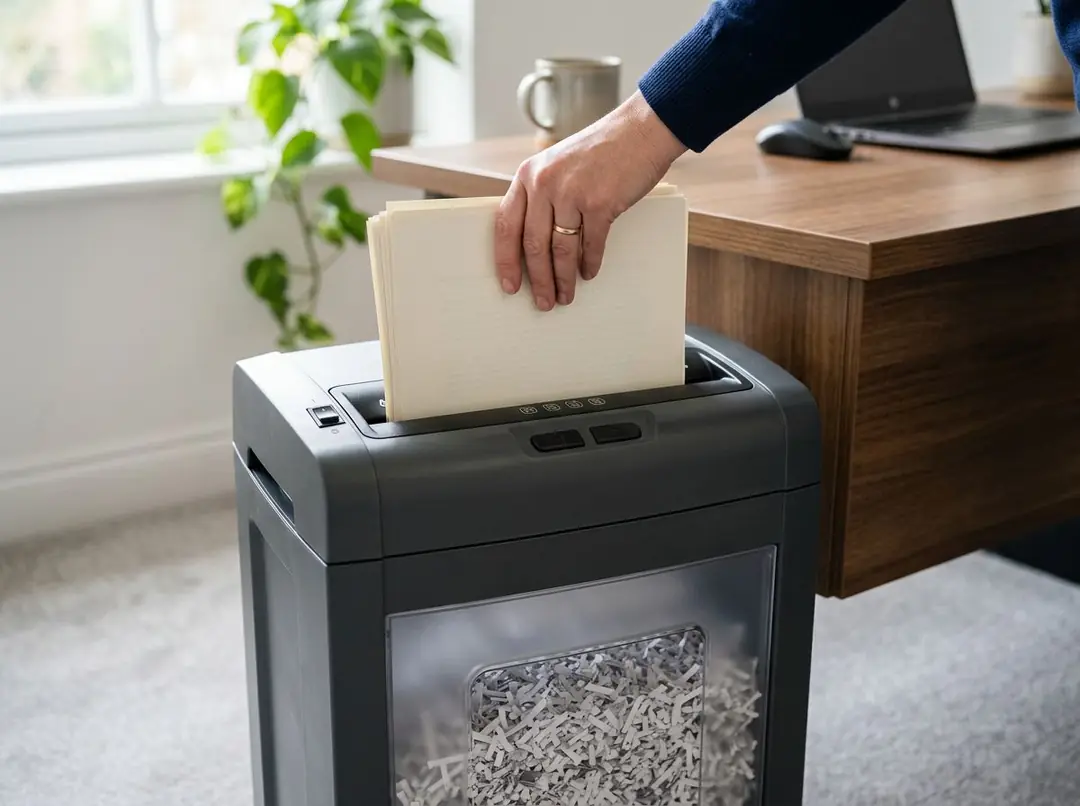
Micro-cut particles behave completely differently. They are small enough to act like loose fill: they find every gap in the cabinet, they cling to surfaces by static, and pouring them from an unlined bin reliably puts a proportion of them on the floor.
The finer your cut type, the more a bag earns its cost — and the more obvious its absence becomes. If you have recently moved from cross-cut to micro-cut and emptying suddenly feels worse, this is why.
Practical habits
Do not overfill. Shredded paper is heavier than it looks, particularly micro-cut. A bag filled past the rim tears at the worst possible moment, usually while being lifted. Most machines have a bin-full indicator; it is worth trusting.
Empty before the bin is packed solid. This is not just about the bag. An overfull bin backs paper up into the cutting head from below, and that is a jam that requires lifting the head off to clear.
Oil before you re-bag, not after. Oiling a full bin soaks the shreds and wastes oil. The efficient routine is: empty, oil the cutters across the full slot width, fit the new bag, run a couple of scrap sheets.
Fold the cuff over the bin rim. This stops the bag slipping down as it fills, which is the usual cause of paper going around the bag rather than into it. It takes two seconds and prevents most spillage complaints.
Bag material and thickness
Thickness is quoted in mil or microns. Thin bags are cheaper and adequate for strip-cut output; thicker bags resist tearing under the weight and slight abrasiveness of dense micro-cut shreds.
If bags are splitting during removal rather than being overfilled, the material is too light for the load rather than the size being wrong. Moving up a thickness usually costs very little relative to the nuisance it removes.
Recycling considerations
Shredded paper is recyclable in principle, but many kerbside and commercial programmes will not accept it loose. The short fibres jam sorting equipment, and the small pieces escape during handling and contaminate other streams.
Recyclable bags let the whole sealed bag go into paper recycling where the local programme accepts that — which is worth confirming with your provider before building a process around it. Some accept bagged shreds, some require a specific bag type, and some will not take shredded paper at all.
Two further points if security is the reason you are shredding. First, check whether your recycling route is acceptable under whatever policy governs the documents — handing a sealed bag to a third party is still a transfer of custody. Second, cut type matters here: micro-cut output is generally accepted as destroyed, while strip-cut output sometimes is not, because it remains reconstructable in principle.
Buying in bulk
Bags are consumables with an indefinite shelf life, so bulk packs are straightforwardly economical provided you have somewhere flat and dry to keep them. Work out your consumption from how often you currently empty the bin, add a margin, and buy accordingly.
One caveat: if you are about to change machines, hold off. Bin volumes vary considerably between models, and a box of 50 bags in the wrong size is a box of 50 bags you cannot use.
A quick checklist
- Find your bin capacity in gallons on the product page specification table.
- Match the bag rating to it — not approximately, but to the stated figure.
- Choose a heavier gauge if you run micro-cut.
- Confirm your recycling route accepts bagged shreds before relying on it.
- Fold the cuff over the rim every time.
Find the right size in shredder waste bags, and keep oil or lubricant sheets beside them so emptying and oiling stay one routine.