

Comb and wire binding produce documents that look broadly similar on a shelf and behave completely differently in use. One question settles the choice faster than any specification comparison: will this document ever need to change?
Comb binding
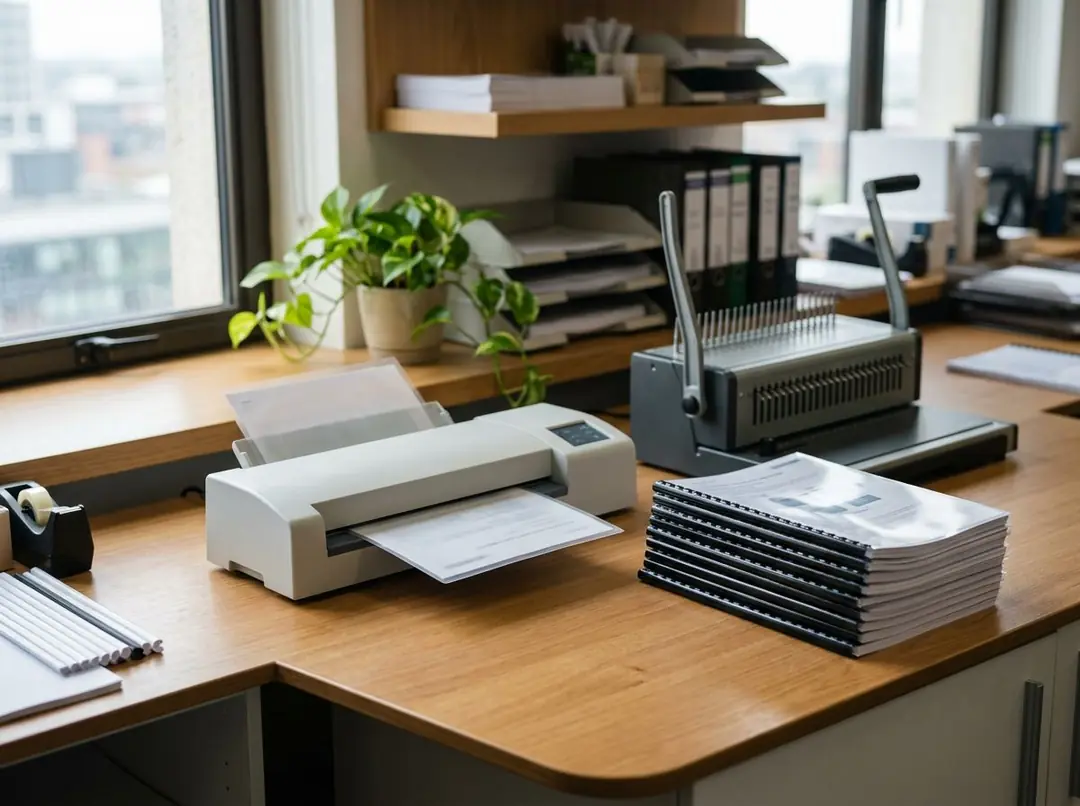
Plastic comb binding uses a curled plastic spine with teeth that open to accept rectangular punched holes. A binding machine holds the comb open, you drop the pages on, and it closes.
Its defining property is that it reopens. Put the document back in the machine, open the comb, add or remove or reorder pages, close it again. The comb is reusable.
That makes comb the right format for anything revised: training manuals, policy handbooks, price lists, procedure documents, project files that grow. Combs also come in a wide diameter range, so a single machine covers a ten-page handout and a several-hundred-page manual.
The trade-offs. Comb-bound documents do not lie completely flat and will not fold back on themselves — the spine is a closed loop, so pages can only open so far. The plastic spine reads as less formal than wire. And the rectangular holes are more visible than wire's small round ones.
Wire binding
Wire binding uses a double-loop metal spine crimped closed. Once closed it is permanent: reopening destroys the spine.
What you get in exchange is a noticeably more professional finish and, more importantly, a document that lies completely flat and folds back on itself. For anything read at a desk, held in one hand, or propped open while someone works from it, that difference matters far more than it sounds.
Wire suits final documents: reports, proposals, presentations, year-end accounts, recipe collections, anything going to a client.
The trade-offs. Permanence, obviously. Wire also costs more per document, and the spines are not reusable. Crimping requires a little more care than closing a comb — over-crimping distorts the loops and under-crimping leaves the spine able to spring open.
Choosing between them
- Will pages change? Comb. This is decisive on its own and outweighs everything below.
- Does it need to lie flat or fold back? Wire.
- Is it going to a client or a board? Wire generally presents better.
- Do you bind widely varying page counts? Comb, for the diameter range and lower cost per document.
- Is cost per document the priority? Comb, comfortably — and combs can be reused.
- Will it be posted? Comb. Wire loops can distort in transit unless well packed.
Sizing the spine
Both formats are sold by diameter, matched to page count, and both are usually listed with a maximum sheet capacity.
Undersizing is the common error. A spine packed to its stated maximum will not turn freely, pages drag against each other, and the punched holes take strain every time the document opens. If you are between two sizes, go one step up — the document will open properly and last considerably longer.
Remember paper weight affects this. A hundred sheets of 20lb copier paper and a hundred sheets of 32lb presentation stock are not the same thickness, and the heavier stock may need the next size.
Punch capacity is a separate number
This catches people out. A binding machine has two distinct limits: maximum punch capacity (how many sheets it can punch in one go) and maximum binding capacity (the largest spine it can close).
A machine might bind a 300-sheet document while punching only 15 sheets at a time — meaning that document takes twenty separate punching operations. For occasional use that is tolerable. For regular volume it is the difference between a five-minute job and a half-hour one, so check the punch figure specifically if you bind often.
Covers finish the job
A clear front cover and an opaque card back is the standard combination and does most of the work in making a bound document look finished. Clear fronts let the title page show through; card backs give the document rigidity so it stands on a shelf.
Thermal covers are a different system entirely — a pre-glued spine that bonds under heat, with no punching at all. They produce the cleanest-looking result and a true flat spine you can print on, but they are permanent, require a thermal binding machine, and the spine size must match the page count closely.
Punch quality matters more than it sounds
Both formats depend on clean, correctly aligned holes, and this is where cheap machines show their limitations.
Two things to look for. Disengageable punch pins let you switch off the pins at the edges so you are not left with a half-punched hole on a non-standard paper size — worth having if you bind anything other than letter. An adjustable edge guide keeps the margin consistent between punches, which is what stops a document where the first fifteen pages line up and the next fifteen sit 2mm off.
Misaligned holes are the most visible sign of a document bound on the wrong machine, and no amount of care at the binding stage fixes them.
Cost per document, roughly
For a typical 100-page report, the consumable cost is the spine plus two covers. Combs are the cheaper spine and can be reused if a document is retired; wire costs more and is single-use.
Where volume is high, that difference compounds — but so does the time cost of punching. A machine with a 15-sheet punch capacity takes seven operations for a 100-page document; one rated at 25 takes four. If you bind regularly, punch capacity affects your real cost more than the spine price does.
Which to buy first
If you are setting up from scratch and can have only one system, choose comb. It is cheaper per document, covers a wider page range, and the ability to reopen a bound document turns out to matter more often than people anticipate. Add wire later for client-facing work if the presentation gap becomes a problem in practice.
Browse comb binding machines and combs or wire binding supplies.